Похожее видео
×
Russian Taiga - What is it?
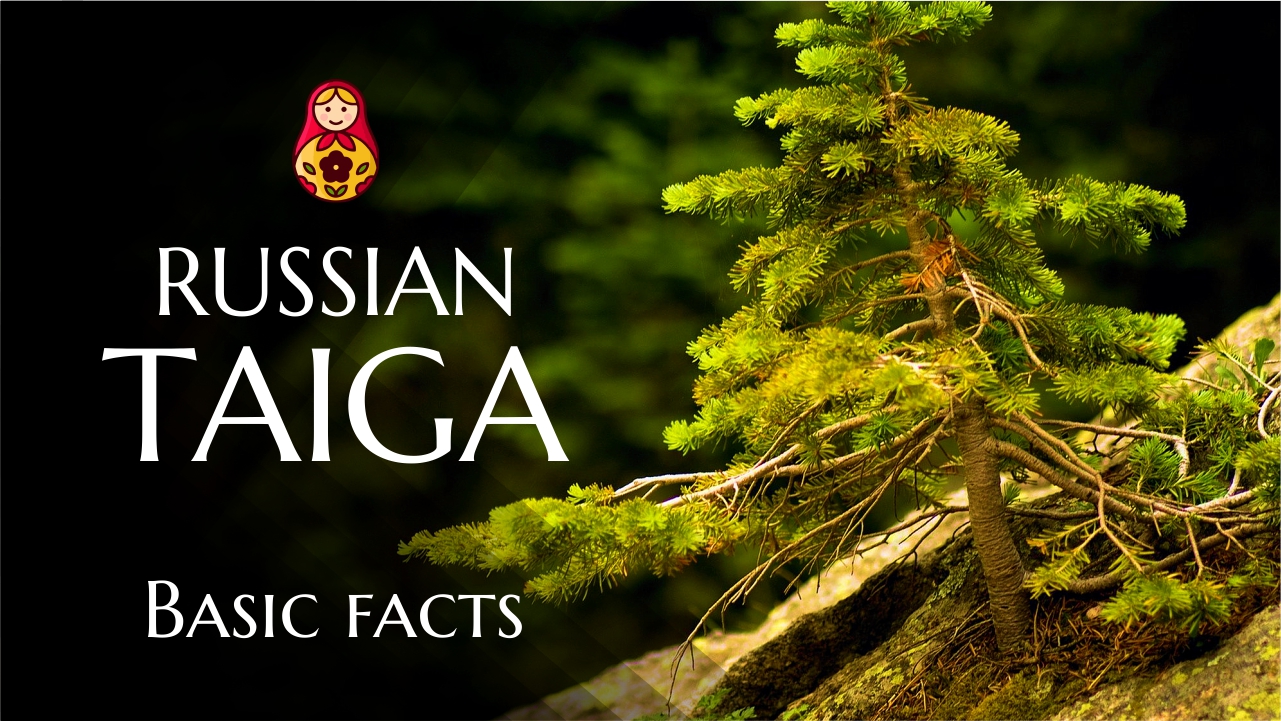
Видео: Russian Taiga - What is it?
Taiga ˈtaɪɡə Russian: тайга IPA: tɐjˈɡa relates to Mongolic1 and Turkic2 languages generally referred to in North America as a boreal forest or snow forest is a biome characterized by coniferous forests consisting mostly of pines spruces and larches. The taiga or boreal forest has been called the worlds largest land biome.3 In North America it covers most of inland Canada Alaska and parts of the northern contiguous United States.4 In Eurasia it covers most of Sweden Finland much of Russia from Karelia in the west to the Pacific Ocean including much of Siberia much of Norway and Estonia some of the Scottish Highlandscitation needed some lowlandcoastal areas of Iceland and areas of northern Kazakhstan northern Mongolia and northern Japan on the island of Hokkaidō. The Adirondack Mountains of Upstate New York form the southernmost part of the Eastern forest-boreal transition ecoregion constituting part of the worlds taiga biome. The main tree species the length of the growing season and summer temperatures vary across the world. The taiga of North America is mostly spruce Scandinavian and Finnish taiga consists of a mix of spruce pines and birch Russian taiga has spruces pines and larches depending on the region while the Eastern Siberian taiga is a vast larch forest. Taiga in its current form is a relatively recent phenomenon having only existed for the last 12000 years since the beginning of the Holocene epoch covering land that had been mammoth steppe or under the Scandinavian Ice Sheet in Eurasia and under the Laurentide Ice Sheet in North America during the Late Pleistocene. Although at high elevations taiga grades into alpine tundra through Krummholz it is not exclusively an alpine biome and unlike subalpine forest much of taiga is lowlands. The term taiga is not used consistently by all cultures. In the English language boreal forest is used in the United States and Canada in referring to more southerly regions while taiga is used to describe the more northern barren areas approaching the tree line and the tundra. Hoffman 1958 discusses the origin of this differential use in North America and how this differentiation distorts established Russian usage.5 Climate change is a threat to taiga6 and how the carbon dioxide absorbed or emitted7 should be treated by carbon accounting is controversial.,




2026-04-18 в 18:06:24






2022-06-15 в 10:23:07





2026-04-18 в 18:07:52