
Похожее видео
×
Bhagwan Mahavir Jayanti Rally Shobhayatra
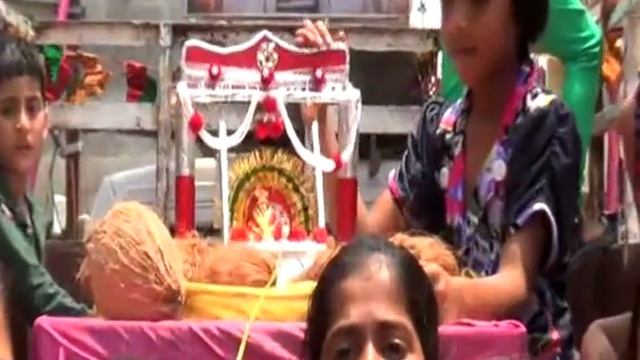
Видео: Bhagwan Mahavir Jayanti Rally Shobhayatra
In Jainism Mahavir Jayanti also known as Mahavir Janma Kalyanak is the most important religious holiday. It celebrates the birth of Mahavira the last Tirthankara. On the Gregorian calendar the holiday occurs either in March or April.5 He was born on the thirteenth day of the rising moon of Chaitra. The chronology accepted by all Jains places Mahavirs birth in 599 BCE.6 Birth Legend Mahavira was born into royalty as the son of King Siddhartha and Queen Trishala. During pregnancy Trishala was believed to have had a number of auspicious dreams all signifying the coming of a great leader. The exact number of dreams differs according to the school of Jainism Svetambaras generally believe that the actual number is fourteen while Digambaras claim sixteen instead. Regardless the astrologers that interpreted these dreams claimed that the child would become either an emperor or a Tirthankar. It is said that when Trishala finally gave birth to Mahavira the god-king Indra bathed the newborn himself with celestial milk a ritual essentially marking him as a Tirthankar. Celebrations Local statues of Mahavira are given a ceremonial bath called the abhisheka. During the day many Jains engage in some sort of charitable act in the name of Mahavira while others travel to temples to meditate and offer prayers. Lectures are typically held in temples to preach the path of virtue as defined by Jain doctrine. Donations are collected in order to promote charitable missions like saving cows from slaughter or helping to feed poor people. Ancient Jain temples across India typically see an extremely high volume of practitioners come to pay their respects and join in the celebrations See also Also called Translation: Birth Anniversary of Mahavira Mahavir Janma Kalyanak Observed by Jains Type Religious India National holiday Significance Birth Anniversary of Mahavira Celebrations Going to the Jain Temple Observances Prayers Religious rituals Date Decided by the Jain calendar Vira Nirvana Samvat 2013 date 24 April 1 2014 date 13 April Sunday2 Frequency annual Mahavira 540 BCE468 BCE1 also known as Vardhamana was the twenty-fourth and last tirthankara of Jainism. He was born into a royal family in what is now Bihar India. At the time of his birth the whole town was marked by prosperity in terms of agriculture health wealth and wisdom. It is for this reason that he was named as Vardhman Hindi : Vridhi by his parents. At the age of 30 he left his home in pursuit of spiritual awakening Diksha. For the next 12 and a half years he practiced intense meditation and severe penance after which he achieved Kevala Jnana or enlightenment. He travelled all over India for the next 30 years to teach his philosophy which is based on ahimsa satya asteya brahmacharya and aparigraha. Mahavira attained nirvana after his physical death at the age of 72. He was one of the most popular propagators of Jainism and he is regarded as a reformer of Jainism rather than its founder. Early life Queen Trisala and the Newborn Mahavira The exact place of birth of Mahavira is unknown. Historians have identified three places in Bihar as his possible birthplace: Kundigram in Vaishali district Lachhuar in Jamui and Kundalpur in Nalanda. Most modern historians agree that Basokund was his birthplace.2 Traditionally Kundalagrama in the ancient city of Vaishali is regarded his birthplace however its location remains unidentified.3 According to Jainism Mahavira was born in 540 BCE.4 Some historians identify Mahavira as a junior contemporary of Gautama Buddha leaving his year of birth ambiguous.56 but most of the historians and Jain followers agree that Mahavira was born in 540 BCE and place his date of birth on the thirteenth day of the rising moon of Chaitra in the Vira Nirvana Samvat calendar.78 In the Gregorian calendar this date falls in March or April.9 Mahavira was born into the royal family of King Siddartha of Kundgraam and Queen Trishala sister of King Chetaka of Vaishali.10 His childhood name was Vardhamana which means One which grows because of the increased prosperity in the kingdom at the time of his birth. Both his parents were strict followers of Pārśva.11 According to Śvētāmbara traditions the embryo of Mahavira was transferred from a Brahmin woman Devananda to a Kshatriya woman Trisala. This is described in the Acaranga and Kalpa Sūtras. In the Vyākhyāprajñapti Mahavira acknowledges Devananda as his real mother.12,


2023-07-28 в 17:18:52

2026-05-20 в 12:58:19



2026-05-20 в 13:00:32

2026-05-20 в 12:55:33

2026-05-20 в 12:59:46

2023-07-28 в 17:24:59
2023-07-28 в 17:13:44

2026-05-20 в 13:01:16

2023-07-28 в 17:22:54
![Best London Walk - London Eye, Big Ben To Chinatown [4K HDR]](https://pic.rtbcdn.ru/video/a7/35/a735c53650d3246eaa39b2b444b7040e.jpg)




2023-07-28 в 17:17:59