RCA ENGLISH - видео - все видео
Новые видео из канала RuTube на сегодня - 18 April 2026 г.
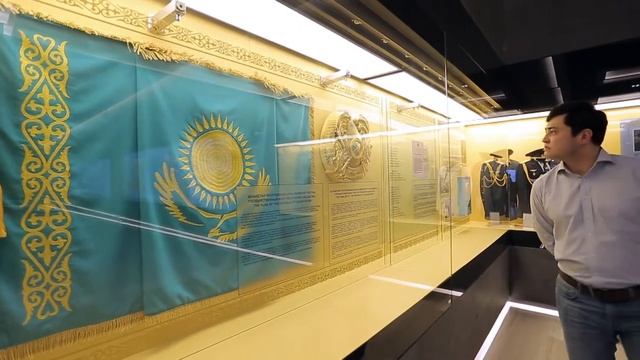
Watch part 1 (1:00 - 2:24) of this video about Shein and answer the questions: 1. How does Shein determine which designs to produce more? 2. What is the difference between Shein's production model and traditional retail in terms of order quantities and timing? 3. How does Shein's inventory turnover rate compare to its competitors like H&M and Zara? 4. Why does Shein use a small batch model for production? Watch part 2 (2:24-4:24)ofthisvideoandfillinthegaps: Shein, a popular online retailer, works with numerous smaller manufacturers to offer __________(1) to consumers. The company uses a system where designers create a product, prepare __________(2), and then identify a contract manufacturer to produce the item. Shein's ordering platform can automatically place new orders based on the __________(3) in real-time. By ordering in smaller batches, Shein aims to reduce the risk of excess unsold inventory, saving up to __________(4). Critics argue that Shein's low prices may lead to increased consumption and potentially higher overall __________(5). Despite concerns, a 2023 UBS report revealed that Shein shoppers in the U.S. spend significantly more on clothing compared to the __________(6). The brand's ability to maintain low prices is a subject of scrutiny regarding its impact on __________(7) and waste levels.1. What is the burden of proof in a civil case? • A) Beyond a reasonable doubt • B) Greater weight of evidence • C) Preponderance of guilt 2. What is a common misconception about the burden of proof? • A) It is easier in civil cases than in criminal cases. • B) It is the same in all types of cases. • C) It only applies to criminal cases. 3. In criminal cases, what standard must be met for conviction? • A) Greater weight of evidence • B) Beyond and to the exclusion of every reasonable doubt • C) Preponderance of evidence 4. What analogy is used to explain the burden of proof in civil cases? • A) A basketball game • B) The scales of justice • C) A race 5. What does it mean if the scales of justice tip slightly towards the plaintiff? • A) The defendant automatically wins. • B) The plaintiff has met their burden of proof. • C) The jury must deliberate indefinitely. 6. Can a jury have doubts and still find for the plaintiff in a civil case? • A) Yes, they can find for the plaintiff with some doubt. • B) No, they must be completely certain. • C) Doubts are irrelevant in all cases. 7. What factor do jurors consider when evaluating witnesses? • A) The witness's physical appearance • B) The believability and credibility of the witness • C) The amount of time the witness spent on the stand 8. Why is it important for an attorney to choose credible witnesses? • A) They need witnesses who can entertain the jury. • B) Juries weigh the credibility of witnesses heavily. • C) Witnesses do not influence the outcome of a trial. 9. When should an attorney assess potential problems in their case? • A) During jury deliberation • B) Before presenting the case in front of a jury • C) Only after the trial has concluded 10. What is one reason why the burden of proof is lower in civil cases compared to criminal cases? • A) Civil cases involve less serious consequences. • B) Civil cases are always resolved quickly. • C) Jurors are less attentive in civil cases.Watch the video and after, discuss the following questions: 1. Are you engaged in your job? What makes you or your colleagues engaged or not? 2. How did you cope with the change from being an employee to becoming a manager? Were/are you prepared to be a manager? 3. Does your department or team have a hierarchical model based on authority? How does this kind of organisation affect performance? 4. Is failure necessary for success? If yes, are you given the opportunity to fail by your boss? 5. How do you give effective feedback without upsetting the person receiving that feedback? 6. Do you or the bosses in your company defend your/their teams if they failed to achieve success but they gave it their all? Additional tasks: 1. Management Discussion 1. What is the role of a manager? 2. What is the difference between a manager and a leader? 3. What are the best qualities of a manager? 4. Should a manager make the decisions, or should they consult their team before making decisions? 5. Should a manager be friends with the people on their team? Should they socialise together? 6. Is there a difference between the way men and women manage? 7. Can you describe the best and worst managers you've had? What qualities did they have/lack? 8. How do bad bosses get promoted? 2. Management Vocabulary • to demoralise (verb), demoralised (adjective), to crush someone's spirit (verb, idiom) – to cause someone to lose hope or confidence; to do something that destroys a person's self-esteem. • to micromanage (verb) – to excessively control everything, including minor details, in a process. • to bring (something) to the table (verb, idiom) – to offer a benefit or advantage for something. • to facilitate (verb), facilitator (noun) – to make things easier/happen; someone who facilitates. • appraisal (noun) – an assessment of someone's performance. • carrot and stick approach (adjective) – a motivational technique where people are offered incentives (the carrot) to perform well, but also face punishments (the stick) if they perform badly. 3.Using the vocabulary words above, complete the following sentences (remember to use the correct form of the word, e.g. verb conjugation or plural noun) Management Vocabulary • to demoralise (verb), demoralised (adjective), to crush someone's spirit (verb, idiom) – to cause someone to lose hope or confidence; to do something that destroys a person's self-esteem. • to micromanage (verb) – to excessively control everything, including minor details, in a process. • to bring (something) to the table (verb, idiom) – to offer a benefit or advantage for something. • to facilitate (verb), facilitator (noun) – to make things easier/happen; someone who facilitates. • appraisal (noun) – an assessment of someone's performance. • carrot and stick approach (adjective) – a motivational technique where people are offered incentives (the carrot) to perform well, but also face punishments (the stick) if they perform badly. Using the vocabulary words above, complete the following sentences (remember to use the correct form of the word, e.g. verb conjugation or plural noun) 1. I have my annual———-tomorrow, and I'm a bit nervous about it. 2. We're really looking forward to working with Steve. He has worked in this industry for years and will ———-alot ————-. 3. Under the ———-, the staff would receive bonuses for increasing sales, but could face losing their job if their sales reduce. 4. The team were left completely———— lost their bonuses. 5. My boss always—————me. He calls me up every five minutes asking for an update! 6. The training course will be——————-by Anna. If you need anything, she can help you.Listen to six people talk about their personal experiences with money, and for questions 1 to 6, choose the correct answer. 1. Joseph... A. has bought a new bike. B. needs to take a loan. C. will have a new bike soon. 2. Taylor... A. uses cash for her shopping. B. doesn't use cheques anymore. C. is a street performer. 3. Dina... A. helped a friend to pay her rent. B. works in a bank. C. lent her friend money for medical expenses. 4. Liam... A. has much less money for leisure now. B. never feels like going out with friends. C. wants to go on holiday. 5. Ben... A. will save money every month. B. works as a mechanic. C. owes money to the mechanic. 6. Sophie... A. regrets lending money to family. B. borrowed money from a cousin. C. is in a difficult financial situation.▎True/False Questions 1. True or False: International visitors to New Zealand will have to pay a tax to enter the country starting next year. 2. True or False: The tourism tax in New Zealand will range from $30 to $40. 3. True or False: The government of New Zealand estimates that the tourism tax will generate up to $55 million annually. 4. True or False: Tourists from Australia will be required to pay the new tourism tax. 5. True or False: The number of tourists visiting New Zealand has decreased over the past three years. 6. True or False: Popular activities that attract tourists to New Zealand include bungee jumping and whale watching. 7. True or False: Some individuals believe that the new tax will make New Zealand a more attractive destination for tourists. 8. True or False: The Minister for Tourism in New Zealand stated that the tax is intended to help improve tourism infrastructure and protect natural areas. Further Discussion What comes to mind when you think of New Zealand? Please explain your answer. Would you like to try bungee jumping someday? Why? Why not? Have you ever been kayaking? If so, please share your experience. If not, would you like to? Do you prefer to explore cities or natural areas when you travel? Why? If you were to write a travel guide, what parts of your country would you include? Please explain your answer.People are the only source of _______________(1) Everyone is equal before the _______________(2) Everyone has the right to _______________(3) A person's _______________(4) Defense of Republic of Kazakhstan is a _______________(5) Government in Kazakhstan is like a _______________(6) All questions about government and its goals can be answered from the _______________(7) The Constitution ensures the _______________(8) All regulations and documents are based on the _______________(9) Constitution is the guarantee of _______________(10)Listen to an interview with a worker about his job, and for questions 1 to 7, choose the correct answer. 1. What is Toby's view of salary? a. He'd rather have a well-paid job than an interesting job. b. He wants an interesting job, even if it's badly paid. c. He will do unpaid hours if it allows him to further his career. 2. What is Toby's view of working hours? a.He will do extra hours in order to get a promotion. b.He works overtime because he needs the money. c.He avoids working any more hours than necessary. 3. What is Toby's view of work flexibility? a.Luckily, he does not require flexible working hours. b.His working conditions are flexible enough for his needs. c.He wishes that his work offered more flexibility. 4. What is Toby's view of vacation time? a.He can't travel to the places he'd like to go. b.Vacation time is not very important to him. c.He wishes he had more vacation time. 5. What is Toby's view of commuting? a.The time he spends commuting is increasing. b.He finds commuting easier now than in the past. c.He feels lucky that his commute to work is shorter now. 6. What is Toby's view of his colleagues? a.Team-building days have helped him build work relationships. b.He gets on well with all his colleagues, and that helps make his job less tedious. c.He doesn't see eye to eye with some of his colleagues. 7. What is Toby's view of job security? a.Luckily, his job is secure. b.He is uncertain about the future of his job. c.His job is temporary, so he's looking for more work.Career