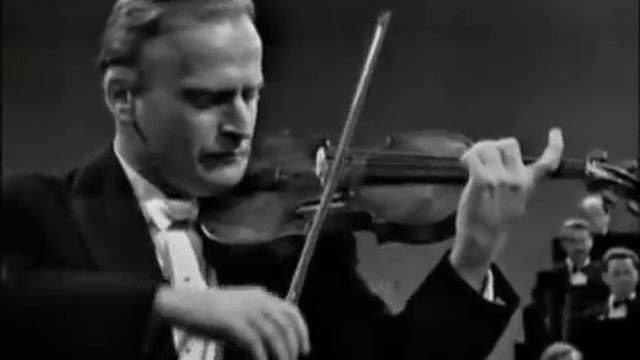
Гитарное созвездие - видео - все видео
Новые видео из канала RuTube на сегодня - 19 April 2026 г.
Новые видео из канала RuTube на сегодня - 19 April 2026 г.
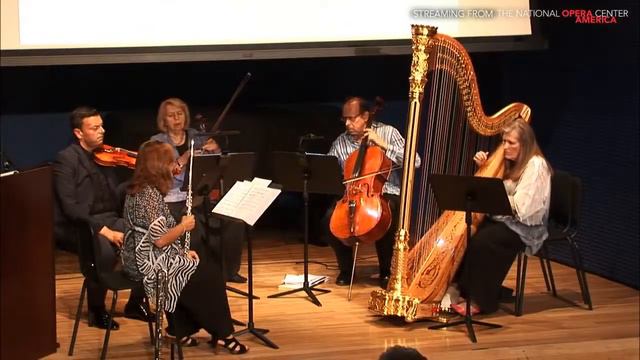
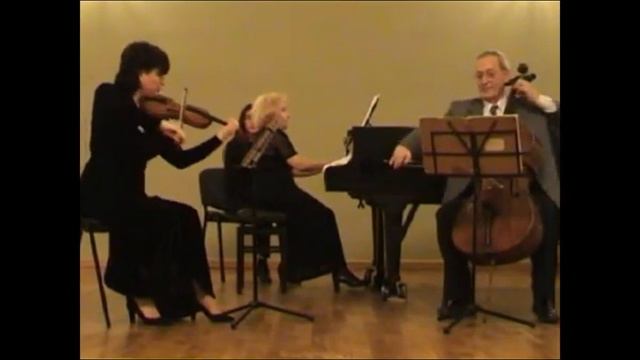
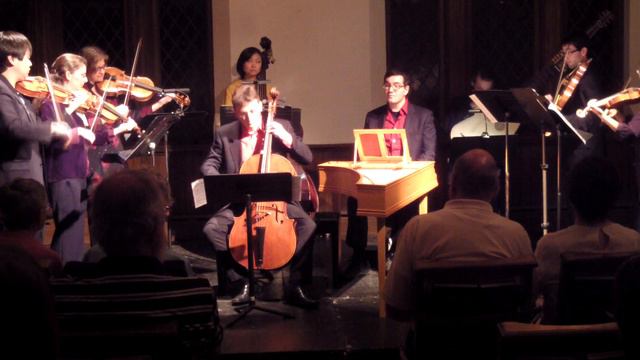
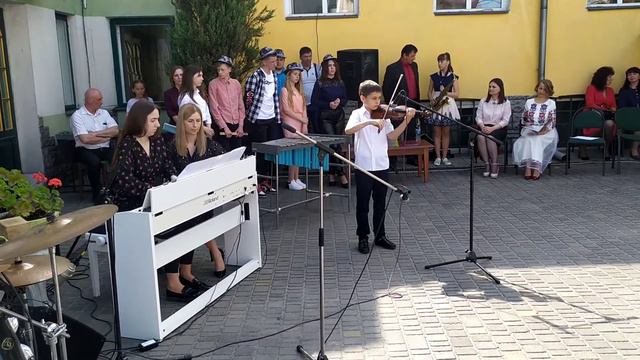
The acclaimed Canta Libre Chamber Ensemble presented a multi-media concert of new music by women for flute, strings and harp, on Thursday, May 19 @ 8:00 PM at National Opera Center’s Marc A. Scorca Hall, 330 7th Ave. (between 28th and 29th Sts.) in Manhattan. Featured works included composer Adrienne Albert's Lullaby, in a version newly created for Canta Libre. Visit her at https://www.adriennealbert.com. Performers were Sally Shorrock, flute, Bradley Bosenbeck, violin, Veronica Salas, viola, Bernard Tamosaitis, cello and Karen Lindquist, harp. This concert was made possible, in part, with support from Humanities New York and New York Women Composers, Inc. Canta Libre was founded in 2002 by flutist Sally Shorrock to foster the performance and enjoyment of musical literature specifically written for flute, harp and strings. They have been acclaimed by audiences throughout the Northeast, with regular performances in Connecticut, Westchester and Long Island. They were featured at The American Harp Society 50th Anniversary National Conference, and have appeared at Lincoln Center, on WNYC at The Green Space, The Music Festival of the Hamptons, Barge Music, Concerts at One at Trinity Church in Manhattan, WLIW TV, National Public Radio of Long Island, and The Brooklyn Public Library. Trained at the finest conservatories, many of the members have performed and toured internationally with appearances at major festivals, including Aspen, Spoleto and Tanglewood. Their critically-acclaimed CD of music by Jean Francaix, Joseph Guy Ropartz, Jean Yves Daniel-Lesur and Maurice Ravel is available on the 4Tay label. Much more about them at http://www.cantalibre.org.Исполняет Александр Угаров (альт). Концертмейстер - Марина Глазунова. (Полтавское музыкальное училище им. Н. В. Лысенко, 2007 г.)Ипполитов-Иванов, «Мелодия»È SABATO E PRIMA DEL DPCM "SABATO" VOLEVA DIRE DIVERTIMENTO, SVAGO, DISCOTECA.. BALLARE INSOMMA. Con questo video vi riporto nel 1998 dove nelle disco ci si scatenava con questo pezzo(me lo hanno raccontato perchè io avevo solo 10 anni ). Per un attimo mettete da parte i pensieri di questi giorni e scatenatevi. TAGGA QUALCUNO RICORDANDOGLI CHE APPENA TUTTO FINIRÀ SI RITORNERÀ A BALLARE E A SCATENARCI!!! #betteroffalone #betteroffalonecover #anni2000 #anni90 #chiarconte #dancingviolinist #electricviolin #puglia #misposoinpuglia #weddingshow #violino #violinoelettrico #chiaraconteviolinista #aliceDJ #danceelettronica #ATB #germany #violincovernatela kvirkvelia-piano/.manana kantaria-violon/.otar chubinishvili-chelo.Concerto in B minor, RV 580 op. 3, no. 10 for four violins, cello, and strings from L'Estro Armonico (Amsterdam, 1711) Antonio Vivaldi (1678--1741) Allegro Largo Allegro The Sebastians (sebastians.org) 7 September 2013 All Angels' Church, New York CityТерпелюк "Гоцульщина", виконує Макарій Климко 10 років. Рава-Руська ДМШ 2021р. Клас викладача Брезовського Андрія МиколайовичаViolin Concerto in D Major, op 61 by Ludwig van Beethoven Yehudi Menuhin, violin London Symphony Orchestra Sir Colin Davis London 1962A fresh start to a complete Bach Sonata and Partita cycle. ~~~ Running."Дьявольский скрипач" и профессор Игорь Эпштейн из Кёльна помогает незнакомой коллеге в Юрмале на китайской скрипке за 50 долларов собрать "приличный" парнос, что у него таки и прекрасно получилось!Nocturne by Lili Boulanger accompanied by Gaspard Tanguay-Labrosse Headphones for better qualityIvy Yin performs Concerto in E Minor, Mov 1 by Mendelssohn on the violin for the 2024 Classical Music Competition as part of the Charleston International Music Competition. https://charlestoncompetition.comFrom the Israel Philharmonic 60th Anniversary Gala, here's the last movement of Vivaldi's concerto for 4 violins in B minor. Violin I: Shlomo Mintz Violin II: Gil Shaham Violin III: Menahem Breuer Violin IV: Maxim Vengerov Conductor: Zubin MehtaAn essentially self-taught musician, Johann Joachim Raff (Lachen, Schwyz 1822 - Frankfurt am Main 1882) was lauded in his homeland as a master of contemporary musical techniques. One of several forgotten Romantic composers whose works found a performance renaissance near the twentieth century's end, Joachim Raff was the son of a German organist from Württemberg. The family had modest resources, and Raff's only formal education consisted of teacher-training studies at a Jesuit school. But he was determined on a musical career and taught himself the essentials of composition. Generally speaking, if anyone has heard any piece of Joachim Raff, it's his famous Cavatina, the third of his Six Morceaux for Violin & Piano. It became so famous that it has been made into dozens of different arrangements. It has been and is sold alone. Sadly, all but one of the other five little gems, which make up the collection, have disappeared and are out of print. While it is true that the melody of Raff's "Famous Cavatina" is a glorious creation, we think you will agree that these other five are wonderful too. Raff was regularly mentioned in the same breath as Wagner, Liszt, and Brahms as one of Germany's leading composers. All of the critical commentaries which appeared during those years spoke of him as an equal to them. Incredibly, by the 1920's his music had all but disappeared from the concert stage. It seems virtually unimaginable that a composer whose talent was recognized and whose music was admired by Mendelssohn and Liszt, could become a mere footnote, yet this is what became of Raff and his music for most of the 20th century. Only now is he being rediscovered to the delight of those fortunate enough to hear his music. The Six Morceaux date from 1862, just as Raff was entering his period of greatest creativity. In these relatively short pieces he set himself a specific goal: To create archetypal examples of specific musical forms. He chose six: The March, the Pastorale, the Cavatina, the Scherzo, the Canzona (a short lyrical poem) and the Tarantella. Each little piece is elaborated with formal perfection that serves only the purpose of creating an perfect example. The Marcia and Scherzino are brilliant and faithful examples of their forms. In the Pastorale, Raff wonderfully evokes the quiet and peaceful mood of the idyll, which, of course, is the language of the Pastorale. The Cavatina's two melodies are marvelous, the second with its heroic intensity, has never failed to move its listeners. The Canzona is every bit as convincing and surely deserved to become as famous as the Cavatina. Who can say why it did not happen? The last piece, Tarantella, is a tour d'force, brilliantly portraying the whirling energy of the Italian dance form. Source: AllMusic (https://www.allmusic.com/artist/joachim-raff-mn0001610113/biography). Although originally composed for Violin & Piano, I created this Arrangement of the "Tarantella" from 6 Morceaux (Op. 85 No. 6) for Oboe & Strings (2 Violins, Viola & Cello).Bridgehampton Chamber Music Festival: Live Performance - August 2, 2012 Stefan Jackiw, Jonathan Crow