От идеи до реализации без сложностей - видео - все видео
Новые видео из канала RuTube на сегодня - 20 April 2026 г.
Новые видео из канала RuTube на сегодня - 20 April 2026 г.
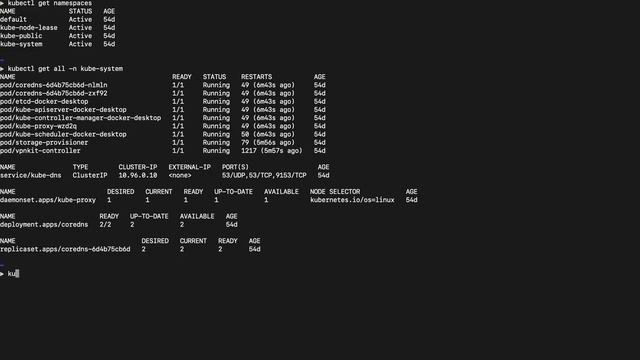
Dave Cottlehuber: Immutable FreeBSD FreeBSD contains a number of powerful features that allow practically immutable server & container deployments. This talk shows how to integrate these together, in a real-world scenario. zfs & boot environments FreeBSD pkg poudriere image to produce base system images poudriere image to produce custom jail images, deployable via pkg combining webhooks and ansible to automate deployment across clusters This talk will be generally suitable for anybody managing multiple FreeBSD systems, automating their lifecycle, and will show working code. Dave Cottlehuber: Dave has spent the last 2 decades trying to stay at least 1 step ahead of The Bad Actors on the internet, starting off with OpenBSD 2.8, and the last 9 years with FreeBSD since 9.3, where he has a ports commit bit, and a prediliction for obscure functional programming languages that align with his enjoyment of distributed systems, & power tools with very sharp edges. Professional Yak Herder, shaving BSD-coloured yaks since ~ 2000 FreeBSD ports@ committer Ansible DevOops master Elixir developer Building distributed systems with RabbitMQ and Apache CouchDB enjoys telemark skiing, and playing celtic folk music on a variety of instrumentsGoogle Cloud Certification Course | Free Online Course by Google Cloud | Assessment 2 Answers Answer of assessment 1: https://youtu.be/4_mBDFkwksw Google Cloud Platform Business Professional Accreditation Site link : https://skillshop.exceedlms.com/student/catalog/list?category_ids=668-google-cloud Alternative Link: https://skillshop.exceedlms.com/student/path/7325-google-cloud-platform-business-professional-accreditation You’ll need to complete all course videos, modules, and assessments and receive a minimum score of 80% on each assessment to receive credit. It is recommended that you take the courses in the order displayed. GCP for Business Professionals Video: Welcome Module 1: The evolution of cloud technology Module 2: Create business value with Google Cloud Module 3: Security and compliance with Google Cloud Module 4: Foster business innovation with cloud GCP Compute Module 1: Introduction to Compute Engine Module 2: Introduction to App Engine Module 3: Introduction to Kubernetes Engine Module 4: Introduction to Cloud Functions Module 5: Introduction to Firebase Module 6: Introduction to Google Networking Assessment: GCP Compute GCP Storage and Databases Module 1: Introduction to Cloud Data Transfer Module 2: Introduction to Cloud Storage Module 3: Introduction to Cloud SQL Module 4: Introduction to Cloud Spanner Module 5: Introduction to Cloud Bigtable Module 6: Introduction to Cloud Datastore Module 7: Introduction to Cloud Firestore Assessment: GCP Storage and Databases Big Data and Machine Learning Module 1: Introduction to BigQuery Module 2: Introduction to Cloud Dataflow Module 3: Introduction to Cloud Pub/Sub Module 4: Introduction to Dataproc Module 5: Introduction to machine learning Module 6: Introduction to IoT Assessment: GCP Big Data and Machine Learning Resources Optional Google Cloud Training WebsiteApache Submarine is the ONE PLATFORM to allow Data Scientists to create end-to-end machine learning workflow. ONE PLATFORM means it supports Data Scientists to finish their jobs on the same platform without frequently switching their toolsets. From dataset exploring data pipeline creation, model training (experiments), and push model to production (model serving and monitoring). All these steps can be completed within the ONE PLATFORM. In this talk, we’ll start with the current status of Apache Submarine – how it is used today in deployments large and small. We'll then move on to the exciting present & future of Submarine – features that are further strengthening Submarine as the ONE PLATFORM for data scientists to train/manage machine learning models. We’ll discuss highlights of the newly released 0.4.0 version, and new features 0.5.0 release which is planned in 2020 Q3: - New features to run model training (experiments) on K8s, submit mode training job by using easy-to-use Python/REST API or UI. - Integration to Jupyter notebook, and allows Data-Scientists to provision, manage notebook session, and submit offline machine learning jobs from notebooks. - Integration with Conda kernel, Docker images to make hassle-free experiences to manage reusable notebook/mode-training experiments within a team/company. - Pre-packaged Training Template for Data-Scientists to focus on domain-specific tasks (like using DeepFM to build a CTR prediction model). We will also share mid-term/long-term roadmap for Submarine, including Model management for model-serving/versioning/monitoring, etc. Speaker: Wangda Tan (Cloudera) Wangda Tan is Sr. Manager of Compute Platform engineering team @ Cloudera, responsible for all engineering efforts related to Kubernetes, Apache Hadoop YARN, Resource Scheduling, and internal container cloud. In the open-source world, he's a member of Apache Software Foundation (ASF), PMC Chair of Apache Submarine project, He is also project management committee (PMC) members of Apache Hadoop, Apache YuniKorn (incubating). Before joining Cloudera, he leads High-performance-computing on Hadoop related work in EMC/Pivotal. Before that, he worked in Alibaba Cloud and participated in the development of a distributed machine learning platform (later became ODPS XLIB).You can now catch up on Jingxiao Lu's presentation on Rubik at #FOSSASIA to learn more about this ground-breaking solution.#openEuler #opensourceOpentracing gives us a standard for recording interactions across a distributed microservice architecture, whilst Jaeger is a monitoring tool that shows us the flow of events. It gives huge insight to both devs and ops teams, and is also a potentially cheaper way of demonstrating compliance with MiFID and GDPR.Anatole Tresch gab der Developer Week ein Interview zu seinem Talk "Microservice basierte Applikationen mit fabric8 entwickeln". Mit fabric8.io steht schon seit einiger Zeit ein sehr flexibles und effizientes Tooling bereit, um Microservices mit Java zu entwickeln und auf Kubernetes/Openshift zu deployen. Fabric8 stellt dabei nicht nur Tools zur Verfügung, um ihre Java Applikationen automatisiert in Docker-Container zu packen, sondern erlaubt es auch den kompletten CI/CD-Software-Stack inkl. Kubernetes/Openshift lokal zu installieren, womit Entwickler auch in Zukunft offline ihre Programme schreiben und testen können.kubectl api-resources | grep namespace kubectl get namespaces kubectl get all -n kube-sysytem kubectl create ns my-namespace kubectl delete ns my-namespaceIn this video we used the code that we wrote for validating webhook controller in the videos https://www.youtube.com/watch?v=NRmNE-6Wb7g&t=122s https://www.youtube.com/watch?v=XtaXnrHaIU4&t=4978s and then wrote mutating admission controller on top. The mutating admission controller, mutates the kluster resources if the resource to add the version field if it's not present in the spec of the resource. I have pushed the code in the branch mutate-hook in the below repo: https://github.com/viveksinghggits/valkontroller/tree/mutate-hook Web: https://viveksingh.dev/ JSONPatch Website: http://jsonpatch.com/ Validating and Mutating Admission controllers: https://www.youtube.com/watch?v=U1gTq1oY2ZQ&t=2s Writing Validating Admission controller from scratch: https://www.youtube.com/watch?v=NRmNE-6Wb7g&t=122s https://www.youtube.com/watch?v=XtaXnrHaIU4&t=4978s 00:00 Introduction 00:23 Agenda 00:46 What are admission controllers their types 02:21 Admission Review object 02:51 Summary till now 03:12 Patch and PatchType 05:29 JSONPatch specification 08:31 How to create the JSONPatch 12:32 Use Case we are trying to write controller for 14:15 Implementing mutating admission controller 36:05 Testing the first version 38:15 Deploying manifests 40:35 Internal Error 41:10 Solving internal error 43:13 Failed again 44:09 Solving secret not found problem 44:54 Testing the things again (worked) 47:44 Order of mutating and validating controllers 48:19 Summary 51:44 Like, Share and Subscribe?Please welcome, Harish Nataraj who is CEO at Levo.ai. He has extensive experience in APIs, Microservices, Observability, and API Security. He is the co-founder of Levo.ai, which is an API Security & Observability solution. #kcdsl2022 #liveseries #k8ssrilanka #cncfLightning Talk: Hacking Kubernetes Networking to Create Telco Solutions - Daniel Finneran, Isovalent Kubernetes is a highly flexible platform for deploying applications, and as we're seeing more and more diverse applications being migrated we're starting to hit the limits of the intended architecture/behaviour. It is none other than the telco space where these limits are being tested the most. This talk largely sums up the experiences that I've had (as the maintainer of the networking sandbox project kube-vip) and the stream of unique requests that have come from various Telco providers. We will walk through some of these technical requests, the reasoning for them and where the gaps in a traditional Kubernetes clusters exists. Then we'll delve into some of the solutions that have been developed to help solve these truly unique telco/networking problems. Finally we'll explore some of the new technologies on the horizon that (such as eBPF) that may provide the solutions required for the cloud native telco solution of tomorrow.Learn about different workload capabilities with Azure Red Hat OpenShift, with Andrea Bozzoni, Red Hat Managed OpenShift Black Belt and Roy de Milde, Microsoft Global Black Belt. Get started today: https://www.redhat.com/en/technologies/cloud-computing/openshift/azureIn this video we cover the basic concepts of connections, credentials, and aliases to better understand the upcoming example videos. About: One of the most powerful features of the Now Platform is its integrations. Combining workflows with integrations enables cross enterprise workflows. This video series describes and demonstrates the concepts around various types of integrations to enable you to go further.Let's Encrypt roots Mozilla! Linux hacks Windows, Chrome cancels Flash, and a simple script for exploring your Ballmer Peak. Support the show ► https://Patreon.com/LinuxGameCast Audio download plus notes ► https://LinuxGameCast.comPresentation for the ONF 5G Connected Edge Cloud for Industry 4.0 Transformation.?? Learn how to craft efficient multi-stage Docker images using distroless scratch! ? Dive into our step-by-step guide to optimize your containerized applications for speed and security. Say goodbye to unnecessary bloat and hello to streamlined images. Watch now and level up your Docker skills! ⭐️? #Docker #MultiStageImages #DistrolessScratch About me: ----------------- LinkedIn: https://www.linkedin.com/in/markgelvoleo GitHub: https://github.com/mgelvoleo/ Web Blog: https://dev-mioblog.pantheonsite.io/ YouTube: / @howtotelevisionПодпишитесь на нас по ссылке! Это важно! https://goo.gl/JF7qBv Самые необычные устройства, самые молодые стартапы - и все это ShowStoppers на #IFA2014 Сделано для http://iXBT.comSo in current tutorial you are going to learn how to create basic project with docker . you are going to learn how to create docker file in visual studio code , next you have to create basic html project , connect this project to docker file , finally you have to run docker image . steps : 1- open visual staid code and create a new folder for your project , if you don't have ready project. 2- now create a new docker file as you can see : dockerfile 3- you have to type docker image inside this file. for example I have to use nginx docker image ... so I have to type " From nginx 4- in this step you have to create or import html project , so to create this project you have to create a folder and new html file . 5- in this step you have to connect html project with docker file ... so to connect this project you have to user type project source , image , and type of project extension , inside src folder , so I have to type : copy src /usr/nginx/index , and save project . 6- now open integrated terminal window ... to open terminal window press command _ j 7- now time to create docker image , so to create docker image with current project "default docker image " use next command line and press enter : docker build . 8- if you are looking to create custom docker image , use next command line : docker -t "type your name for docker image " . + press Enter





![Auto OpenAPI Generation - The Network Doesn't Lie! | Harish Nataraj [LIVE SERIES]](http://pic.rtbcdn.ru/video/f8/5e/f85e93c09985f5e74def1213c15c4f36.jpg)


