Реактивный Канал - видео - все видео
Новые видео из канала RuTube на сегодня - 20 April 2026 г.
Новые видео из канала RuTube на сегодня - 20 April 2026 г.
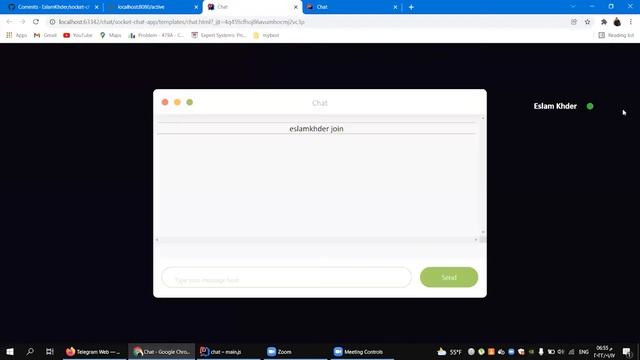
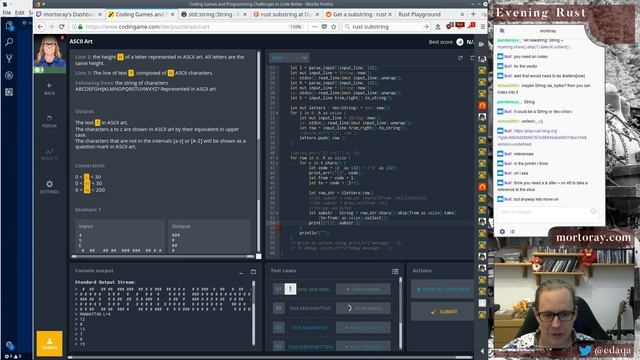
Cara upload whatsapp api ke heroku Kebutuhan : 1. Login https://github.com. Jika belum punya silahkan register 2. Buka https://github.com/ndalu-id/baileys-api 3. Star dulu biar afdol 4. Fork 5. Login ke geroku (atau register jika belum punya) 6. Buat nama app 7. Koneksikan heroku dengan github 8. Search repo hasil fork 9. Connect 10. Deploy 11. Success 12. Jangan lupa donasi biar saya makiin greget https://www.buymeacoffee.com/tofiknuryanto https://paypal.me/tofiknuryantoSi vous souhaitez rejoindre un projet mais que vous n'avais pas les droits de push sur le projet principal , vous pouvez fork le projet et vous faire votre propre repository GitHub. Une fois vos modifications vous pouvez demander un ( Pull Request ) au projet principal ( upstream ). S'il accepte vos modifications il va faire un pull depuis votre GitHub vers le projet Principal. Vous pouvez aussi régulièrement faire un pull de upstream pour mettre à jour votre répository local. Pour utiliser pullRequest directement dans VS Code : https://www.youtube.com/watch?v=GFG52N7lhbIThe Coronavirus Crisis has changed our lives, and we are in the midst of a long period without concerts as we knew them. In addition to the problem of large audiences, the regulations also make it 'virtually' impossible for musicians to get together, to rehearse or perform. However, many technologies and solutions are already available, helping us to find new ways of collaborating and transporting our work to audiences. In the past few months, we have been programming, testing, and rehearsing in an online environment between California, Berlin (DE), and Ghent (BE). Each Saturday afternoon we are presenting a concert that connects six musicians from these locations and guests from other places to each other. The sessions are broadcast live with audio and video feeds from each site. Guest Jonathan Impett, trumpet and live electronics (Norwich, UK) Performers: Constantin Basica (Palo Alto, CA) Chris Chafe (Woodside, CA) Henrik von Coler (Berlin, DE) Fernando Lopez-Lezcano (San Carlos, CA) Juan Parra (Ghent, BE) More info about the artists: https://ccrma.stanford.edu/events/quarantine-sessions-14 The 'Quarantine Sessions' are realized using free and open source technologies, which can be easily adopted by anyone: JackTrip (audio) https://ccrma.stanford.edu/software/jacktrip Jamulus (audio) https://sourceforge.net/projects/llcon/ Jitsi (video) https://jitsi.org/jitsi-meet OBS (streaming) https://obsproject.com #TogetherAtHome #JackTrip #ccrmaAdamatz uses Pushers real-time API empowering functions to create a game amongst other tools including Fastify & Svelte. _ About Pusher Sessions: We're bringing the meetup to you. With Sessions, you can watch recordings of top-notch talks from developer meetups -- wherever and whenever you want. Meetups are a great way to learn from our peers and to keep up with the latest trends and technologies. As developers ourselves, we at Pusher wanted to bring this great content to more people... So we built Sessions. On Sessions, you can watch talks that interest you and subscribe to be notified when new content gets added. If you run a meetup and want to get involved, kindly get in touch. _ About Pusher: Pusher is a hosted service with APIs, developer tools and open source libraries that greatly simplify integrating real-time functionality into web and mobile applications. Pusher will automatically scale when required, removing all the pain of setting up and maintaining a secure, real-time infrastructure. Pusher is already trusted to do so by thousands of developers and companies like GitHub, MailChimp, the Financial Times, Buffer and many more. Getting started takes just a few seconds: simply go to pusher.com and create a free account. Happy hacking!Making a knowledge and information management program with Rust, warp, and SurrealDB. https://github.com/RaphaelDarley/sybilhttps://cafe.naver.com/cortexsh/2868Follow me as I try to build a digital version of a physical board game! This is a long-form series (1 hour per episode, approximately) with little to no editing. The intent is to end up with a project that we can actually publish and use together! You will see me try, test, fail, think and hopefully succeed in the end. This is *not* a series about simpler or beginner concepts in bite sized formats. Your feedback is warmly welcome. Please help me out! Share the video, like it, tweet about it, etc... Source code lives at: https://github.com/spirodonfl/machi-koro https://spirofloropoulos.comتم رفع ملفات المشروع على الرابط التالي https://github.com/muhammedessa/Django_Python_tutorialProje : SaaS olarak ChatSupport SDK yazıyorum.June 26, 2015Are you ready to revolutionize your inventory management with a cutting-edge POS system? Our Java-based solution is perfect for those new to programming and seeking an intuitive, easy-to-use system. Whether you're running a small retail store or a large warehouse, our POS system with integrated barcode scanning will streamline your inventory management process. And, with our comprehensive Java tutorial for beginners, you'll be up and running in no time. Don't miss out on this opportunity to enhance your operations with the latest technology - start your journey with our Java projects today! #javaforbeginners #java Learn the basics of Java programming with our beginner-friendly tutorial. In this video, we cover the development of a POS (point of sale) system using Java. From setting up your development environment to designing the user interface, we guide you step by step through the entire process. Whether you're new to programming or just new to Java, this tutorial is perfect for you. Watch now and start building your own POS system today! Java is one of the most popular and versatile programming languages available and is widely used for developing POS (Point of Sale) systems. A Java POS system is an efficient and powerful tool for retailers, allowing them to manage their inventory in real-time, process transactions quickly and accurately, and generate reports to stay on top of their business. With Java's expansive library of libraries and frameworks, developers can easily customize and integrate the POS system to meet the unique needs of a business. Java's object-oriented programming structure makes it easy to develop and maintain the system, and its scalability makes it ideal for large and small businesses alike. Java's security features ensure that your data is safe, and its low cost of ownership makes it an affordable solution for any business. ----------------------------------------------------------------------------------------------------------------- ? SUBSCRIBE and ?Download FREE Tutorial Playlist Source code : https://bit.ly/3v8PLxm | ? Free Java Tutorial Playlist Source code ?️ (GitHub) : http://bit.ly/2YtSa4Q https://github.com/coolsasindu ----------------------------------------------------------------------------------------------------------------- ⭐️ Want to learn more from me? Check out these links: ► ? Java POS System Playlist With Free Src Code : https://bit.ly/3avhpv8 ► ? Java POS System New Update : https://bit.ly/3vesuu7 ► ? Java Swing ( NetBeans) MYSQL Songs List insert delete update search : https://youtu.be/WPVxJjO_P-E ► ? Java Swing ( NetBeans) MYSQL Data Load to jTable Tutorial:https://youtu.be/FxDO-oYpOvk ► ? Read & Write QR code Java : https://youtu.be/iL7MUrK630c ► ? Read & Write Barcode Java : https://youtu.be/PwP03tsR9M0 ► ? Simple pos system for small business with Bill Printing in java | Touch screen POS : https://youtu.be/gDbuwFkEdUQ ► ? Java MySQL NetBeans POS inventory management system Full Video with Src code #dappcode : https://youtu.be/_XTiHxXghEI ► ? Java Login and Register Swing Tutorial : https://youtu.be/fO0QIb6RRno ► ? How do you validate a username in Java | username Already exist : https://youtu.be/ax-biKNDg8w ► ? Java Login and Register Tutorial Make Step by Step Using NetBeans And MySQL Database : https://youtu.be/ZsbgiTR6osA ► ? Billing Print system with source code. Bill Receipt Print In Java : https://youtu.be/JIFRAyrqIW0 ► ? view counter in php | php for beginners |with project file :https://youtu.be/2nvXD0WobTA ► ? simple pos system for small business with Bill Printing in java | Touch screen POS : https://youtu.be/gDbuwFkEdUQ ► ? Java POS inventory management system Full Video MySQL Net Beans with Src code 7 Houer : https://youtu.be/_XTiHxXghEI ► ? Java Table Colum Width Size Fix : https://youtu.be/0oGmbzFNJNE ► ? java percentage Calculation | java for beginners :https://youtu.be/Csup1tbKnMc ? FOLLOW ME ON @tutorialsforbeginner ? INSTAGRAM : https://www.instagram.com/dappyoutube/ ? Twitter: https://twitter.com/dappyoutube ? Facebook : https://www.facebook.com/javafreecodes/ ? discord : https://discord.gg/2P6DWTR4vG ? Blog: http://www.ezcod.blogspot.com ✌? Also, follow me on Github for some FreeCode https://github.com/coolsasindu ✌? ✨? CHEARS! Thanks For Watching This Tutorial ✨ Java,POS system,Inventory management,Barcode scanning,Tutorial,Beginner-friendly Retail,Warehouse,Technology,E-commerce,Point of sale,Inventory tracking,Java programming,Java development #javaTutorial #MYSQLtutorial #NetBeansTutorial #Tutorial #techinbox #mysqlquery #javasrccode #javaProject #java #javacode8base is a low-code software development platform that lets developers build amazing cloud applications using JavaScript and GraphQL. With 8base, devs can speedily deploy secure, stable and scalable cloud infrastructure in minutes, freeing up more time and resources for the parts that make their apps unique. Get started on 8base! Visit our website - https://www.8base.com/ Sign up for 8base - https://app.8base.com/auth/signup See what our customers have to say - https://www.g2.com/products/8base Contact our solution advisors - https://www.8base.com/csd-contact-formBroadcasted live on Twitch -- Watch live at https://www.twitch.tv/jhkruegerللاستفسار : فيس بوك : https://www.facebook.com/eslam.khder.98 لينكد ان : https://www.linkedin.cn/in/eslam-khder-4145351b0 ============================================================ WebSocket From Wikipedia, the free encyclopedia Jump to navigationJump to search WebSocket Websocket connection.png A diagram describing a connection using WebSocket International standard RFC 6455 Developed by IETF Industry Computer science Connector type TCP Website Official website WebSocket is a computer communications protocol, providing full-duplex communication channels over a single TCP connection. The WebSocket protocol was standardized by the IETF as RFC 6455 in 2011, and the WebSocket API in Web IDL is being standardized by the W3C. WebSocket is distinct from HTTP. Both protocols are located at layer 7 in the OSI model and depend on TCP at layer 4. Although they are different, RFC 6455 states that WebSocket "is designed to work over HTTP ports 443 and 80 as well as to support HTTP proxies and intermediaries", thus making it compatible with HTTP. To achieve compatibility, the WebSocket handshake uses the HTTP Upgrade header[1] to change from the HTTP protocol to the WebSocket protocol. The WebSocket protocol enables interaction between a web browser (or other client application) and a web server with lower overhead than half-duplex alternatives such as HTTP polling, facilitating real-time data transfer from and to the server. This is made possible by providing a standardized way for the server to send content to the client without being first requested by the client, and allowing messages to be passed back and forth while keeping the connection open. In this way, a two-way ongoing conversation can take place between the client and the server. The communications are usually done over TCP port number 443 (or 80 in the case of unsecured connections), which is beneficial for environments that block non-web Internet connections using a firewall. Similar two-way browser–server communications have been achieved in non-standardized ways using stopgap technologies such as Comet or Adobe Flash Player.[2] Most browsers support the protocol, including Google Chrome, Firefox, Microsoft Edge, Internet Explorer, Safari and Opera.[3] Unlike HTTP, WebSocket provides full-duplex communication.[4][5] Additionally, WebSocket enables streams of messages on top of TCP. TCP alone deals with streams of bytes with no inherent concept of a message. Before WebSocket, port 80 full-duplex communication was attainable using Comet channels; however, Comet implementation is nontrivial, and due to the TCP handshake and HTTP header overhead, it is inefficient for small messages. The WebSocket protocol aims to solve these problems without compromising the security assumptions of the web. The WebSocket protocol specification defines ws (WebSocket) and wss (WebSocket Secure) as two new uniform resource identifier (URI) schemes[6] that are used for unencrypted and encrypted connections respectively. Apart from the scheme name and fragment (i.e. # is not supported), the rest of the URI components are defined to use URI generic syntax.[7] Using browser developer tools, developers can inspect the WebSocket handshake as well as the WebSocket frames.[8] Contents 1 History 2 Browser implementation 3 JavaScript client example 4 Web server implementation 5 Protocol handshake 6 Security considerations 7 Proxy traversal 8 See also 9 Notes 10 References 11 External links History WebSocket was first referenced as TCPConnection in the HTML5 specification, as a placeholder for a TCP-based socket API.[9] In June 2008, a series of discussions were led by Michael Carter that resulted in the first version of the protocol known as WebSocket.[10] The name "WebSocket" was coined by Ian Hickson and Michael Carter shortly thereafter through collaboration on the #whatwg IRC chat room,[11] and subsequently authored for inclusion in the HTML5 specification by Ian Hickson. In December 2009, Google Chrome 4 was the first browser to ship full support for the standard, with WebSocket enabled by default.[12] Development of the WebSocket protocol was subsequently moved from the W3C and WHATWG group to the IETF in February 2010, and authored for two revisions under Ian Hickson.[13] After the protocol was shipped and enabled by default in multiple browsers, the RFC 6455 was finalized under Ian Fette in December 2011. RFC 7692 introduced compression extension to WebSocket using the DEFLATE algorithm on a per-message basis.免费获取【解答、源码(代码)、资料、教程等】 line:mokecome 微信:asd314asd314Arduino Ethernet shield demonstration of remote control of a LED from a Mobile PhoneAfter landing on Mars I fight off the native string inhabitants: they steadfast refuse to create substrings for me. From there I go on to create a poor bit-processing algorithm. All in Rust -- in which I learned a few new things. -- Watch live at https://www.twitch.tv/mortoray

![[P02] Comment Rejoindre Un Projet Github Via Fork Et Pull Request](http://pic.rtbcdn.ru/video/45/bf/45bf3f6de32973fb02e165112b09c8e5.jpg)